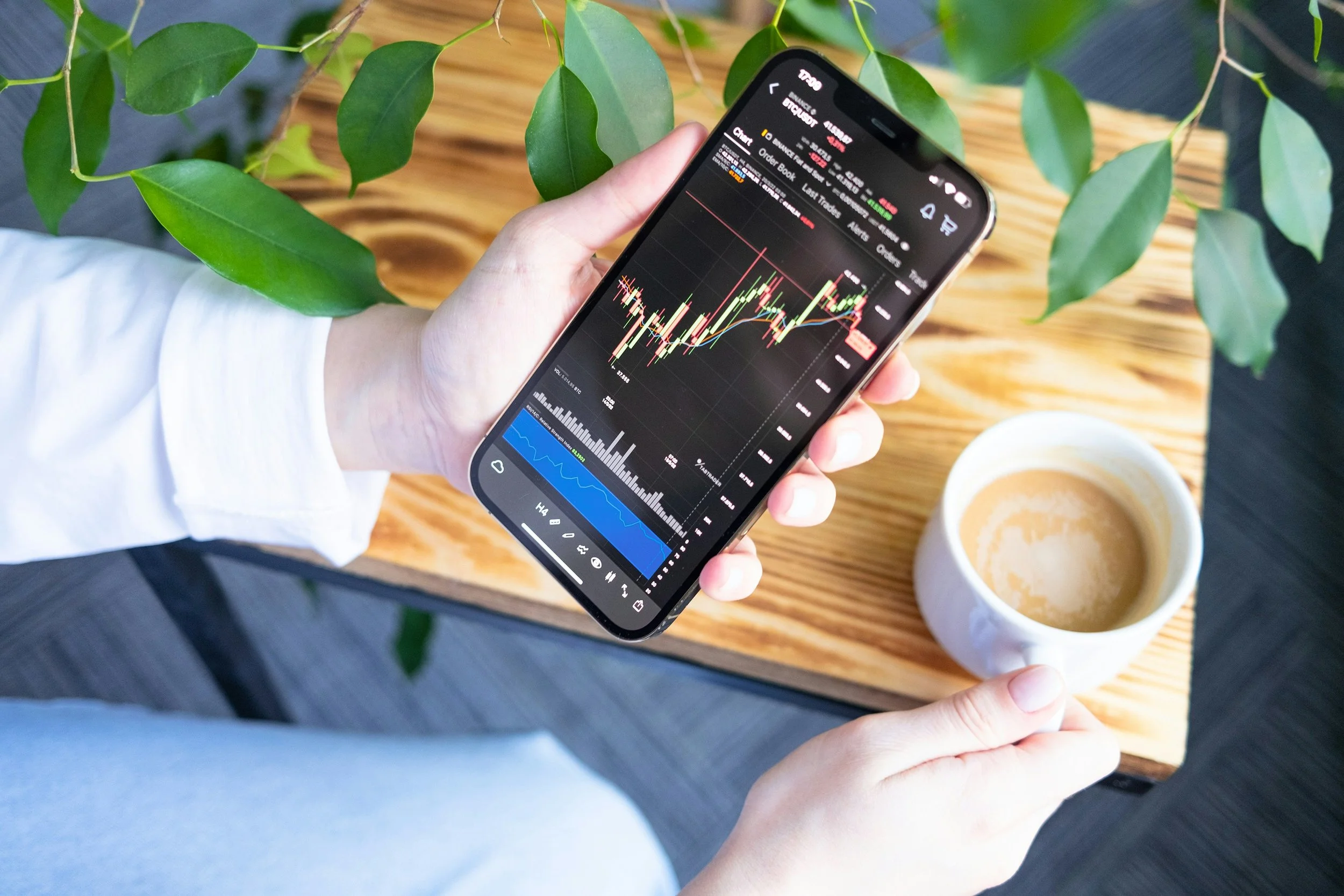
Investing Without Certainty
What if the clarity you keep searching for in investing was never meant to exist in the first place?
It’s normal to feel uncertain about money. The issue isn’t your effort—it’s the expectation that investing should feel predictable. You’ve been taught, directly or indirectly, that if you learn enough, analyze enough, or wait for the right signal, certainty will eventually reveal itself. But it doesn’t. And the longer you pursue it, the more unstable your decisions become.
This is not a personal failure. It is a structural misunderstanding.
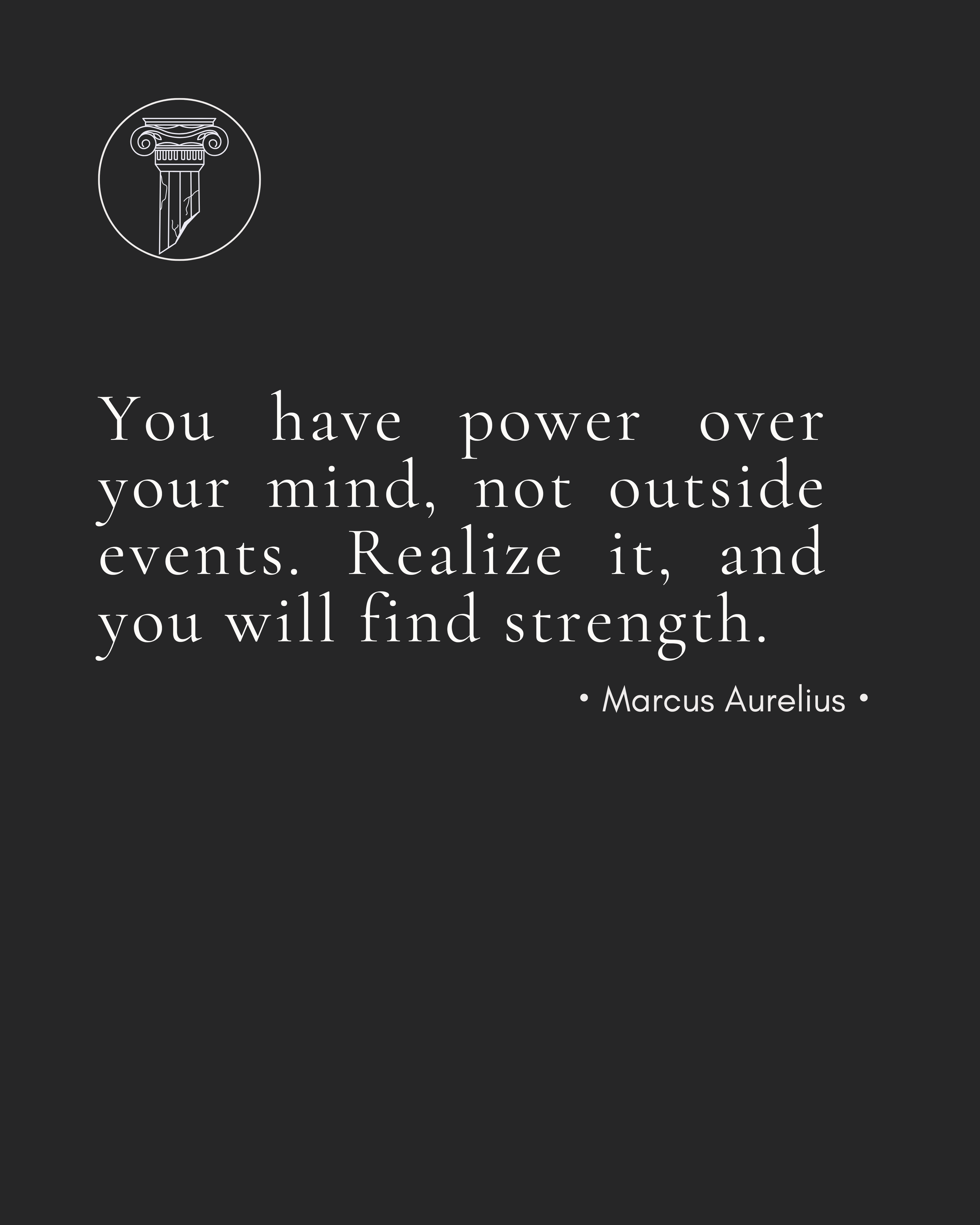
You have power over your mind—not outside events. Realize this, and you will find strength.
This apply to the reality. The market is not designed to reassure you. It is not structured to provide clarity on demand. It moves regardless of your readiness, your interpretation, or your need for confirmation. And yet, you are still required to act within it.
This is where a shift becomes necessary.
You don’t need more information. You need a different relationship with uncertainty.
And this is where the three pillars begin to align. In money, you simplify your approach and commit to consistency. In productivity, you remove the noise that distracts your focus. In wellness, you regulate the internal response that destabilizes your thinking.
You are not trying to predict. You are learning how to remain composed.
The Reality of Uncertainty
Uncertainty is not a phase you pass through before becoming a competent investor. It is the permanent condition in which all investing decisions are made.
Whether you are learning how to invest in stocks, allocating capital into mutual funds, or consistently contributing to an S&P 500 index fund, the underlying environment remains the same. There is no moment where the system becomes fully predictable. There is no point where clarity becomes absolute.
And yet, many still operate as if that moment is coming.
This creates quiet tension. You may notice it in the need to check frequently, to interpret movements, to search for meaning behind every fluctuation. It feels productive, but often it is just disguised discomfort—the mind trying to regain control.
It makes sense to feel this way. But complexity is often self-created.
As Marcus Aurelius observed, “If you are distressed by anything external, the pain is not due to the thing itself, but to your estimate of it.”
The market itself is neutral. It is your interpretation that creates instability.
From a money perspective, this is where simplification becomes essential. You don’t need a complex system to navigate uncertainty. You need a structure you can follow consistently. A small set of decisions, repeated over time, will outperform constant adjustment driven by emotion.
From a productivity lens, the problem isn’t time—it’s attention. Every time you shift focus to react to short-term movements, you fragment your cognitive clarity. You lose depth. You lose direction.
And from a wellness perspective, emotional regulation becomes the foundation. You can’t control every reaction that arises, but you can choose how you respond. You can pause, observe, and decide whether action is necessary.
Uncertainty does not need to be solved. It needs to be understood.
Why Market Prediction Fails?
Prediction promises control. It suggests that if you refine your analysis enough, you can anticipate outcomes with confidence. This is why it feels productive. It gives the illusion of progress, even when no real advancement is made.
But hte market prediction fails not because you lack skill, but because the nature of the market itself.
The financial markets are shaped by countless variables—economic conditions, human behaviors, global events—many of which cannot be measured in real time. Even when predictions appear accurate, they are rarely repeatable. What looks like insight is often timing.
If the financial market is predictable, no one poor. Am I right?
When a prediction works, it reinforces confidence. When it fails, it introduces doubt. Over time, this oscillation leads to instability. You begin to adjust your approach based on outcomes rather than principles. You react instead of execute.
It becomes unsustainable.
As Seneca stated, “We suffer more often in imagination than in reality.”
Financial market prediction amplifies imagination. It pulls your attention into a future that cannot be controlled, while disconnecting you from the present actions that actually matter.
This is where a shift in productivity becomes necessary. You don’t need more analysis. You need a system that reduces friction. A repeatable process that allows you to act without constant reconsideration.
In money, this may look like committing to long-term vehicles such as mutual funds or an S&P 500 index fund—not because they are perfect, but because they reduce decision fatigue. They allow consistency.
In wellness, it requires detachment. Not indifference, but clarity. The ability to observe thoughts without immediately believing them. To recognize that urgency does not always require action.
Prediction seeks certainty. But clarity comes from structure.
Resilience as Strategy
Resilience is often misunderstood as endurance through difficulty. But in investing, it is more precise than that. It is the ability to remain aligned with your strategy without being disrupted by short-term outcomes.
This is where mental resilience becomes your primary asset.
You don’t need to predict the next movement of a stock. You need the capacity to continue your approach when the outcome is unclear. You need to remain steady when progress is invisible. You need to trust a system that does not provide immediate validation.
This is not passive. It is disciplined.
As Epictetus advised, “Make the best use of what is in your power, and take the rest as it happens.”
From a money perspective, this is where consistency becomes your advantage. You don’t need to optimize every decision. You need to execute a strategy repeatedly, without hesitation.
From a productivity standpoint, stop trying to optimize everything. Focus on completing one meaningful action consistently. Complexity slows progress more than you realize.
And from a wellness angle, resilience is built through emotional discipline. You observe, assess, and regulate. You create space between stimulus and response. This space is where stability forms.
Progress in investing is quiet. It compounds beneath the surface.
Small, deliberate actions—executed consistently—create outcomes that feel disproportionate over time. Not because they are dramatic, but because they are sustained.
Resilience is not intensity. It is continuity.
Staying Rational Over Time
Rationality is not a fixed trait. It is a practice that must be maintained, especially when conditions become unstable.
The challenge is not the absence of logic. It is the presence of emotion.
You may feel urgency when markets move quickly. You may feel doubt when results are delayed. You may feel compelled to act, even when no clear action is required. These responses are natural. But if left unexamined, they begin to shape your decisions.
This is where discipline becomes visible.
As Marcus Aurelius wrote, “You have power over your mind—not outside events.”
Rationality begins with awareness. You observe the reaction, you assess its validity, and you decide whether to act. Not every signal deserves your attention. Not every thought requires execution.
From a productivity perspective, if everything feels urgent, nothing is. Choose one priority and execute it fully.
From a wellness perspective, emotional clarity comes from observation, not reaction. You create distance. You allow perspective to form.
And from a money standpoint, the goal is not to earn more—it’s to keep and grow what you earn. This requires consistency, not constant adjustment.
Sometimes, the most rational decision is to do nothing.
Not as avoidance, but as discipline. A deliberate refusal to disrupt a system that is designed for long-term outcomes.
Clarity does not come from more action. It comes from better restraint.
Final Verdict
If certainty never comes, what will you rely on instead?
Will you continue to search for the perfect moment to act, or will you commit to a system that functions without it?
As Seneca reminded, “True happiness is… to enjoy the present, without anxious dependence upon the future.”
Investing does not reward those who wait for certainty. It rewards those who remain steady without it.
You are not here to predict outcomes. You are here to build a structure that endures them.
In money, simplify and commit.
In productivity, remove friction and execute.
In wellness, observe and regulate.
This is not about doing more. It is about doing what matters—consistently, deliberately, and without distraction.
So the question remains:
If the future cannot be controlled, are you prepared to take ownership of what can be?