Financial Habits That Shape Identity
How long are you going to wait before you demand the best for yourself?
Not in ambition. Not in outcomes. But in the way you handle something as ordinary—and as revealing—as money.
It’s normal to feel uncertain about money. The issue isn’t your income—it’s your system. And more precisely, it’s the set of financial habits and spending habits operating beneath your awareness, quietly shaping your identity every day.

You may think your financial life is built on decisions. A promotion. An investment. A moment of restraint. But if you observe carefully, those moments are not the foundation. They are expressions. The real structure is repetition—what you do when no one is watching, when no intention is declared.
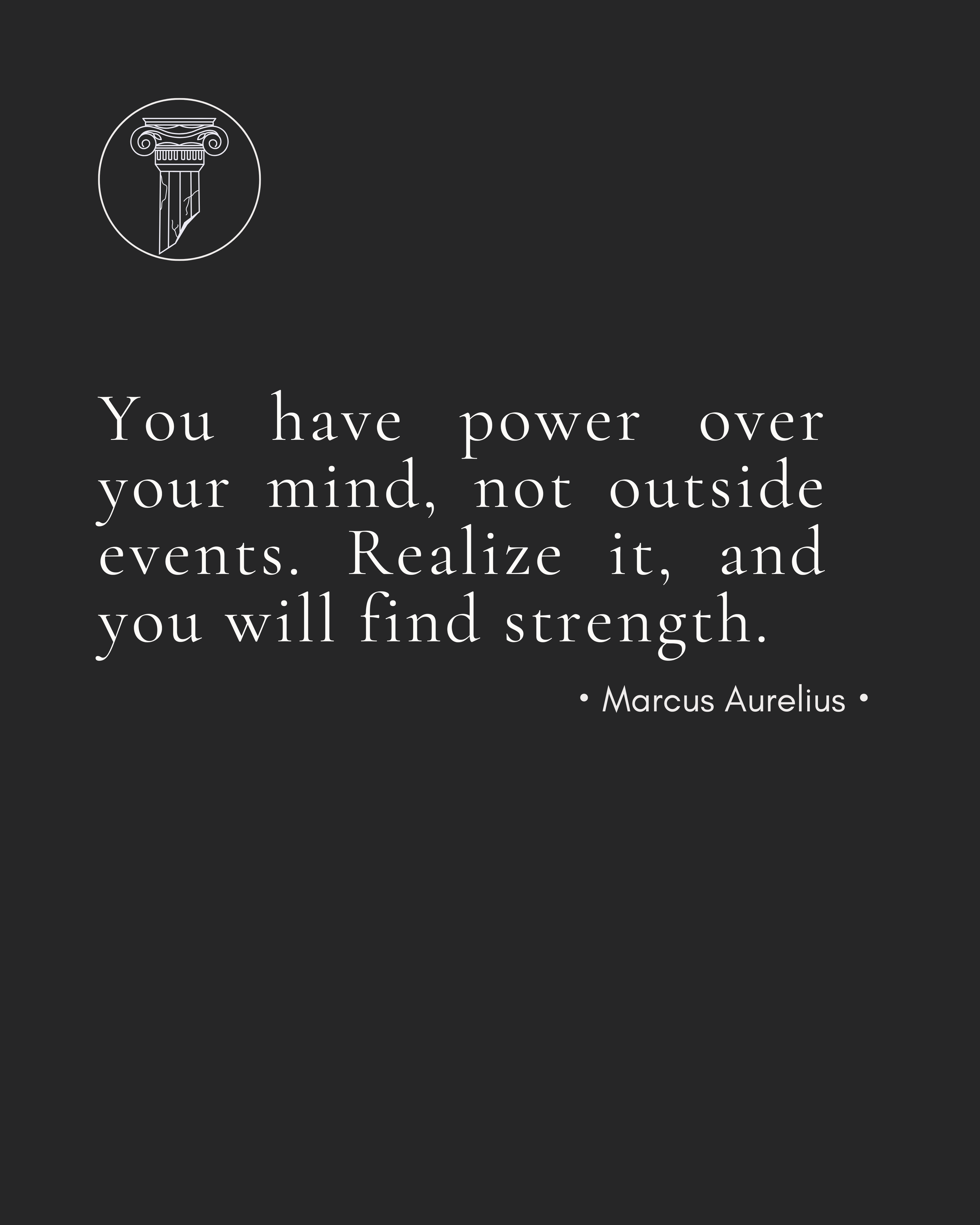
As Epictetus wrote,
“You have power over your mind—not outside events. Realize this, and you will find strength.”
Your financial life follows the same principle. You cannot control markets, timing, or outcomes. But you can observe, assess, and refine your behavior.
This is where clarity begins.
Not by forcing change, but by recognizing what is already in motion.
If you are willing to examine your financial habits honestly, you begin to reclaim something deeper than money—ownership.
And from there, the work becomes simple.
Not easy. But clear.
Habits as Identity
You don’t rise to the level of your financial goals. You settle into the level of your financial habits.
This is where most people misinterpret progress. They assume identity follows results. That once they earn more, save more, or invest better, they will become disciplined.
But the sequence is reversed.
Your identity is already forming through your behavior.
Every repeated action—every overlooked expense, every intentional allocation, every moment of avoidance—becomes evidence. Not of your financial status, but of your internal structure.
It’s easy to feel like you’re not doing enough. But small financial habits, repeated daily, create real wealth.
Not just in numbers.
In stability. In clarity. In self-command.
If your spending habits are reactive, shaped by impulse or emotional fluctuation, your identity begins to reflect inconsistency. Not visibly at first. But internally, as a subtle loss of control.
If your actions are deliberate—even in small ways—you begin to build something more stable. A sense that your behavior is aligned, not scattered.
This is where personal discipline becomes less about restriction and more about identity construction.
As Marcus Aurelius observed, “Waste no more time arguing what a good man should be. Be one.”
Applied here, the principle is direct.
Stop defining what financial discipline should look like. Begin acting in alignment with it.
This is your first anchor.
If your financial habits shape identity, then your daily actions are not small. They are structural.
And once you see that clearly, you stop negotiating with them.
From a money perspective, this is where stability begins.
From a productivity perspective, this is where consistent action replaces scattered effort.
From a wellness perspective, this is where internal clarity reduces emotional friction.
Discipline Over Motivation
Motivation is unreliable.
It feels strong in moments, then disappears without notice. If your financial habits depend on it, your consistency will always fluctuate.
You don’t need more motivation. You need a system that reduces friction.
This is where personal discipline becomes non-negotiable.
Discipline is not intensity. It is repetition without emotional dependence. It is the ability to execute without requiring a particular state of mind.
When everything feels urgent, nothing is. Choose one priority and execute it fully.
Applied to money, this means narrowing your focus.
Not optimizing everything. Not chasing multiple strategies. But committing to one repeatable structure—saving, tracking, investing—and maintaining it.
Consistency beats intensity every time.
This is not a motivational phrase. It is a structural truth.
Because repetition builds identity, and identity sustains behavior.
As Seneca wrote, “True happiness is… to enjoy the present, without anxious dependence upon the future.”
When applied to financial habits, this removes the urgency to see immediate results. You are no longer acting for validation. You are acting for alignment.
This is your second anchor.
In money, discipline creates stability before growth.
In productivity, discipline removes decision fatigue and sharpens execution.
In wellness, discipline reduces emotional volatility by creating predictable structure.
You don’t need to feel ready.
You need to begin—and continue.
Spending as Emotional Expression
Spending habits are rarely neutral.
They often carry emotional intent, even when it is unrecognized.
It’s not what happens to you, but how you react to it that matters.
This applies directly to how money moves through your life.
A purchase may look rational on the surface, but underneath, it may be responding to something else. Stress. Fatigue. Uncertainty. Even boredom.
This does not make it wrong.
It makes it meaningful.
The problem isn’t spending—it’s unconscious spending. Bring awareness to your habits and control returns naturally.
If you begin to observe your spending habits without judgment, patterns become visible.
Not immediately. But consistently.
You may notice that certain environments trigger certain behaviors. That specific emotional states lead to predictable actions. That your relationship with money is less about logic and more about response.
This is where Stoic awareness becomes practical.
As Marcus Aurelius noted, “If you are distressed by anything external, the pain is not due to the thing itself, but to your estimate of it.”
Spending, in many cases, is an attempt to adjust that estimate.
To change how something feels, rather than what it is.
But awareness introduces a pause.
A moment where you can observe instead of react. Where you can choose instead of default.
You don’t need to eliminate emotional spending.
You need to understand it.
This is your third anchor.
In money, awareness transforms reactive spending into intentional allocation.
In productivity, awareness protects attention from being unconsciously spent.
In wellness, awareness creates space between stimulus and response.
And in that space, control returns.
Rewiring Default Behavior
Most of your financial habits do not feel like decisions.
They feel automatic.
That is because they are.
Defaults govern behavior more than intention ever will. And if those defaults are unexamined, they will continue shaping your identity without resistance.
You can’t control market outcomes, but you can control your strategy. Stay consistent with long-term investing principles.
Strategy, in this context, is not complex.
It is structural.
It is the design of your environment to support the behavior you want to repeat.
This is where change becomes efficient.
Instead of relying on willpower, you reduce friction for aligned actions and increase friction for misaligned ones.
Automate what should happen consistently. Delay what should be reconsidered. Simplify what has become unnecessarily complex.
As Epictetus stated, “Make the best use of what is in your power, and take the rest as it happens.”
Your defaults are within your power.
And once they are aligned, behavior becomes easier—not because you are trying harder, but because resistance has been removed.
This is your fourth anchor.
In money, default systems create quiet consistency.
In productivity, systems reduce cognitive load and improve execution.
In wellness, structured environments support calm and stability.
You don’t need to overhaul your life.
You need to redesign what repeats.
Final Verdict
If your financial habits are shaping your identity every day, whether you notice them or not—what, exactly, are they shaping you into?
Are your spending habits reinforcing clarity or confusion?
Is your personal discipline building stability, or are you still negotiating with inconsistency?
As Seneca warned, “It is not the man who has too little, but the man who craves more, that is poor.”
So the question is no longer about how much you earn, save, or invest.
It is about how you operate.
Because your financial life is not waiting for a breakthrough moment. It is being constructed—quietly, steadily—through what you repeat.
You don’t need to force change.
You need to observe, then refine.
And if you are willing to do that—consistently, deliberately—what kind of identity would naturally emerge?