When Enough Becomes Unclear
How much is enough—and who decided that for you?
It’s easy to feel like you’re not doing enough. The numbers grow, your systems improve, your wealth management becomes more refined. And yet, something remains unsettled. It makes sense. When clarity is missing, progress can feel incomplete—even when it is real.
You’re not behind financially. You’re just operating without a defined boundary.
This is where most worries about money begin—not from lack, but from ambiguity. A quiet, persistent uncertainty that shapes your decisions without ever being directly examined. You continue to build, to optimize, to move forward. But toward what, exactly?

The Stoic perspective does not rush to answer. It asks you to pause, observe, and assess. As Epictetus reminds,
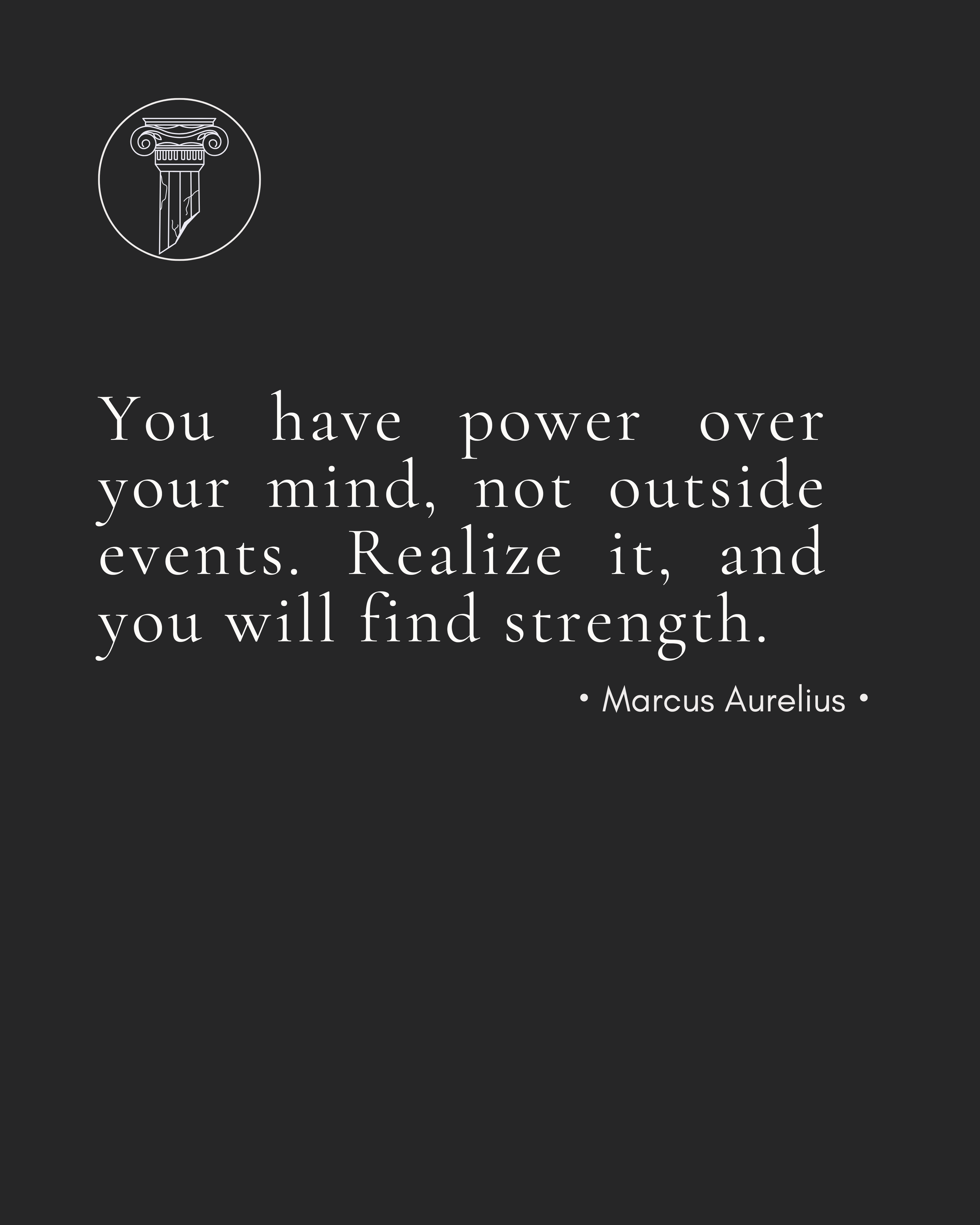
“You have power over your mind—not outside events. Realize this, and you will find strength.”
So before you expand further, consider this: are you building a system, or reacting to one?
Because clarity in money is not only about numbers. It is a matter of life strategy. And without that clarity, even disciplined action can drift.
The Moving Target of Enough
At first, “enough” feels measurable. A number in your account, a level of income, a sense of security you believe will stabilize everything.
But over time, the line shifts.
This is not accidental. It is structural.
As your wealth management improves, your exposure expands. You see more, compare more, expect more. What once felt sufficient begins to feel temporary. What once felt like progress becomes your baseline.
And so the target moves.
It’s easy to assume this means you need to accelerate. To earn more, invest more, optimize further. But this is where many worries about money quietly intensify—not because of scarcity, but because of undefined direction.
Marcus Aurelius offers a precise lens:
“If you are distressed by anything external, the pain is not due to the thing itself, but to your estimate of it.”
The number itself is neutral. The instability comes from interpretation.
This is where your life strategy must become deliberate.
Not reactive to shifting benchmarks, but grounded in what you choose to define as sufficient. Otherwise, progress becomes endless without resolution. Movement continues, but it lacks a stable reference point.
From a productivity standpoint, this resembles a system without a clear output. Effort is consistent, but direction is diffused. You don’t need more effort. You need sharper alignment.
And from a wellness perspective, this constant recalibration creates subtle tension. Not overwhelming, but persistent. A background noise that never fully quiets.
You can continue expanding. But without defining “enough,” expansion becomes automatic rather than intentional.
Desire vs Need
There is a distinction that determines whether your financial life stabilizes or fragments: the difference between desire and need.
Need is grounded. It is stable, essential, and relatively fixed. It supports your structure—your ability to function, to operate with clarity.
Desire is fluid. It evolves with exposure. It reacts to what you see, what you imagine, and what others appear to achieve.
Neither is wrong.
But when desire is misinterpreted as need, your wealth management loses clarity. The system expands beyond intention. Your decisions become driven not by structure, but by momentum.
This is where worries about money deepen—not because you lack resources, but because the boundary between essential and optional has blurred.
Seneca stated it directly: “It is not the man who has too little, but the man who craves more, that is poor.”
This is not a rejection of ambition. It is a call for precision.
To observe your desires without immediately acting on them. To assess whether they align with your life strategy or simply extend it without purpose.
From a productivity lens, this is the discipline of focus. If everything feels necessary, nothing is prioritized. If every desire is pursued, attention fragments.
You’re not lacking discipline. You’re overloaded.
Simplify your priorities and regain control.
From a wellness perspective, this distinction reduces internal noise. Not every thought deserves your attention. Not every desire requires execution.
Clarity comes from filtering, not accumulating.
And once that clarity is established, your financial decisions begin to stabilize—not because you have less desire, but because you understand it.
Wealth Without Resolution
There is a common assumption that more wealth leads to more certainty.
In reality, wealth management without defined boundaries often leads to more complexity.
More options. More decisions. More variables to consider.
Without a clear definition of “enough,” every gain introduces another question. Another adjustment. Another layer of refinement.
You move from building to optimizing. From achieving to maintaining.
And while this appears stable externally, internally it can create a quiet form of instability.
Not because something is wrong, but because something is unresolved.
Seneca observed this pattern long before modern finance: “We suffer more often in imagination than in reality.”
Many worries about money exist not in actual scarcity, but in projected scenarios. Future uncertainties that have not materialized, yet influence present decisions.
From a productivity standpoint, this resembles over-optimization. Constant adjustment without clear completion. A system that refines endlessly but never concludes.
From a wellness standpoint, this creates mental fatigue. The sense that you must always be monitoring, always adjusting, always anticipating.
But wealth itself does not require this.
It is the absence of a defined life strategy that creates it.
Wealth is a tool. It expands what is possible. But it does not define what is necessary.
That distinction must come from you.
Choosing a Boundary
At some point, the question changes.
Not how much can you build—but what are you building toward?
This is where a boundary becomes necessary.
Not as a restriction, but as a structure.
A defined point of “enough” creates stability within your wealth management system. It allows decisions to be made with clarity, rather than constant recalibration.
Without it, every increase invites further expansion. With it, growth becomes intentional.
This is where discipline replaces drift.
Epictetus asks directly: “How long are you going to wait before you demand the best for yourself?”
Demanding the best is not about maximizing endlessly. It is about defining clearly.
From a productivity lens, this is the moment you stop optimizing everything and start completing what matters. A system with an endpoint creates momentum. One without it creates fatigue.
From a wellness lens, this boundary reduces cognitive load. You are no longer negotiating every decision. You operate from a grounded reference point.
You don’t need a perfect plan. You need a plan you can follow consistently.
And once that boundary is chosen—even if it evolves later—the entire system stabilizes.
Your actions become more deliberate. Your progress becomes more meaningful. Your worries about money begin to quiet—not because uncertainty disappears, but because your response to it becomes controlled.
Final Verdict
If your wealth continues to grow, but your definition of enough remains undefined—what exactly are you progressing toward?
It’s reasonable that the line feels unclear. Most people never stop long enough to examine it. They build, expand, optimize—without ever choosing a boundary.
But clarity does not come from accumulation. It comes from decision.
From choosing what is sufficient for your life strategy, and committing to it with discipline.
As Marcus Aurelius stated, “You have power over your mind—not outside events.”
This applies to money as much as anything else.
You can continue to build. You can continue to refine your wealth management. But without defining “enough,” the system will continue to move without resolution.
So pause here.
Not to stop progress—but to direct it.
Because once you define enough, everything changes. Your money becomes aligned. Your productivity becomes focused. Your wellness becomes grounded.
And the question is no longer how much more you need—
But whether you have already overlooked what is enough.